Nicaragua Travel Guide
Nicaragua was without a doubt my favorite country during my backpacking trip to Central America. Volcanoes, colonial cities, paradise islands and one-of-a-kind activities, all at bargain prices.
Whether you’re looking for nature, culture or adventure, Nicaragua has something to offer everyone, and in this guide you’ll find loads of information and tips to plan your trip to Nicaragua as best you can.
Quick menu
- Why visit Nicaragua
- When to visit Nicaragua
- Documents and vaccinations to enter Nicaragua
- What to do and see in Nicaragua
- Suggested itineraries in Nicaragua
- How to get around Nicaragua
- Backpacking Nicaragua: costs
- Backpacking Nicaragua: safety

Telica volcano, León. Instagram!
Why visit Nicaragua
- It’s a paradise for adventure lovers. Whether it’s surfing in San Juan, canyoning in Somoto or riding a board down the slopes of an active volcano in León, Nicaragua offers loads of activities to keep even the most active travelers busy.
- It’s an extremely cheap country, probably the cheapest in all of Central America! Hostels at 5-6€ a night, typical meals for less than 2€, extremely cheap transport. Since it’s a fairly new tourist destination, there’s no doubt that prices will go up over the years, but for now it’s a real budget paradise!
- Granada and León are two colonial gems unrivaled in Central America, with the exception of Antigua in Guatemala. And León is also home to the largest cathedral in all of Central America.
When to visit Nicaragua
In Nicaragua, on the Pacific Ocean side where the main tourist destinations are located, there are two very distinct seasons:
The dry season – from December to April – can be extremely hot but is generally dry, and it coincides with the high season.
The rainy season – from May to November – is characterized by almost daily rain, though it’s often concentrated in the afternoon.
The Caribbean coast is hot and humid year-round, with September and October being particularly rainy due to the peak of tropical storms.
The central mountainous region has its own climate, with sporadic rainfall and lower temperatures compared to the rest of the country.

Crater of Cerro Negro volcano.
Documents and vaccinations to enter Nicaragua
With an Italian passport, you get a 90-day tourist visa when you enter the country (the rules change depending on your nationality, so check yours).
Note: Nicaragua, along with Guatemala, Honduras and El Salvador, is part of the CA-4, an agreement between these four countries that allows a maximum stay of 90 days. So if, for example, you spend 40 days in Nicaragua, then go to Honduras for another 20 days and to El Salvador for another 20 before entering Guatemala, you’ll only be given 10 days on your visa when you enter Guatemala.
You can renew your visa for another 90 days for the entire region simply by crossing the border into Mexico or Belize to the north, or Costa Rica to the south, overland, or by flying in from any other country, even on the same day, doing a so-called “visa run.”
Alternatively, you can renew your visa for another 90 days at an immigration office in one of the four countries. This process can be done only once, and the cost varies by country.
There’s a 12$ entry fee and a 2$ exit fee.
Nicaragua officially requires yellow fever vaccination if you’ve recently (in the last 11 days) been in an at-risk country (much of South America and Central Africa). This check seems to be discretionary, but if you’re coming from one of these countries, it’s a good idea to get the vaccination to avoid problems. Hepatitis A and Hepatitis B vaccinations are always recommended.
For up-to-date information on visas and so on, I recommend checking your own government’s official travel advice (for Italians, the viaggiare sicuri website run by the Ministry of Foreign Affairs).
What to do and see in Nicaragua
Nicaragua is the largest country in Central America, but fortunately, as you can see from the map, most of the tourist destinations are conveniently concentrated in the southwest, which keeps all the journeys fairly short. Starting from the south, let’s now look at the main destinations.
In this guide you’ll often find references to prices. The local currency, called the “Cordoba” and abbreviated as “NIO” or simply “C,” is the official one, but there’s virtually a second official currency, the US dollar.
The US dollar, a bit like in Costa Rica, is in fact accepted practically everywhere, can be withdrawn at ATMs and is often used as the official currency when it comes to prices for tourist activities.
I recommend carrying both currencies, because for transport, food and local businesses it’s cheaper to pay in Cordobas since, although the dollar is accepted, you’re often given an unfavorable exchange rate, while for paying for hostels/hotels and tours, the dollar is often the better deal.
The exchange rate is about 1€ = 41 NIO and 1$ = 37 NIO. For the current exchange rate, I suggest you look at this page.

N.b. Several times throughout the guide you’ll find links to https://www.alltrails.com/. If you want to use offline navigation directly in the AllTrails app, you have to upgrade to the pro version. But you can get around this by downloading the coordinates from the desktop version of the site in “Google Earth KML” format and then loading them into Organic Maps, which is by far one of my favorite travel apps.
San Juan Del Sur
For those coming from Costa Rica, San Juan del Sur is usually the first stop in Nicaragua. It’s basically a “party town” with excellent surf at the nearby beaches.
What to do and see in San Juan del Sur
As I said, San Juan is an excellent place to surf and to learn to surf: there are numerous schools and many hostels offer surf lessons, and there are also jeeps that shuttle between San Juan and the various beaches. Since the best surf beaches are outside San Juan, you could stay right there, between Playa Marsella and Maderas – the prettiest and most popular.
The other big attraction is definitely the “Sunday Funday,” a crawl through the bars and some of the country’s party hostels that takes place every Sunday. I didn’t take part myself, but I met people who came back to San Juan several times during their trip to Nicaragua to join the event, and during a trip to Central America you’ll definitely see someone wearing the event’s tank top! Entry costs 30$ and doesn’t include drinks. This is the event’s official Instagram page.
Another popular thing to do in San Juan is to walk up to the miniature Christ the Redeemer that overlooks the bay from the hill north of town. It’s about 20-30 minutes on foot from the center and entry costs 2$, but the views of the bay and the harbor are really beautiful, especially at sunset (Google Maps).
Finally, if you’re in San Juan between July and January, with the peak in October and November, you could visit the nearby reserve at Playa La Flor, about 18 km south of San Juan, where olive ridley turtles come to breed every year and you can watch them. Entry to the reserve costs 200C, and you can get there from San Juan on the bus to El Ostional.
I’ll be honest, San Juan didn’t excite me all that much: really expensive compared to the rest of the country and too touristy, but it was a nice way to break up my trip north from Costa Rica. If you’re not interested in surfing/partying and you’re not just passing through, though, I’d skip it.

Sunset over the bay of San Juan del Sur.
Where to sleep in San Juan del Sur?
I stayed at Casa Oro hostel and I recommend it: clean, cheap and well organized, with a great breakfast included in the price. Another great option is Hostel SaltWater. But if you’re looking for a party hostel, the three most famous are: Pacha Mama, Naked Tiger and Casa de Olas. Pacha Mama offers its guests Sunday Funday tickets for 15$.
How to get to San Juan del Sur?
Coming from the north, take a bus to Rivas, which has frequent connections to Managua, Masaya and Granada. Once in Rivas, there are frequent departures to San Juan del Sur, 15C.
If you’re coming from Costa Rica instead, once you’ve crossed the border at Peñas Blancas, take the bus to Rivas and ask the driver to let you off at La Virgen (10C), then cross the road and wait for the bus to San Juan coming from Rivas (10C). This is by far the cheapest option.
Ometepe
Ometepe is an extraordinary island formed by the joining of two volcanic islands right in the middle of Lake Nicaragua. The island is really undeveloped and the atmosphere is relaxed.
What to do and see on Ometepe
The two islands offer plenty of activities: from trekking to the two volcanoes, kayak tours, coffee tours, and much more. You can also simply relax in a hammock while enjoying the views of the lake and volcanoes.

Concepcion volcano and the Ometepe airstrip.
Explore the island on two wheels
Renting a scooter or a motorbike is undoubtedly the most practical way to explore the island, as public transport, although it exists, isn’t particularly efficient. Scooters can be rented for 15$ a day and motorbikes for 20$. In one day you can do the complete loop of the island, but if you’re not used to riding, be careful: the stretch behind Maderas volcano isn’t paved.
Along the way, I recommend stopping at “El Pital Chocolate Paradise,” a small restaurant/bar that makes chocolate on site; if you’re interested, they offer a free mini-tour on how the chocolate is made. The prices aren’t exactly cheap, but the place is really nice and the products are really good.
Visit the Ojo de Agua
Ojo de Agua (Google Maps) is nothing more than a natural spring in the middle of the jungle, later turned into a swimming pool. The place is atmospheric and well equipped, although it can get crowded. It’s along the road that connects the two islands and you can get there by bus if you like. Entry costs 10$, but it includes 5$ worth of food or drinks at the restaurant.
Climb the volcanoes
You can climb both volcanoes, but unfortunately I visited Nicaragua during the rainy season. During my stay on Ometepe, the tops of the volcanoes were constantly covered in clouds, except in the early hours of the day, so I didn’t think there was much point in going up.
Anyway, keep in mind that climbing to the top of Concepcion volcano isn’t easy at all (it’s about 1,500 meters of elevation gain) and a guide is required by law; on average, people take about 8 – 10 hours to complete the hike. If you do it in a group, the hike isn’t too expensive: three other guys and I were offered it for 5$ each. You can find the GPS track on AllTrails. According to recent comments, you can do the hike without a guide and even avoid paying the entrance fee if you start early enough. Read the comments.
You can climb to the crater of Maderas volcano, on the other hand, without a guide, and it’s less exhausting than its big brother. There are a couple of trails, but the most popular is the one from Balgue (it’s marked on Organic Maps); the whole hike should take about 6 hours. You can find the trail on All Trails. According to the comments, the locals ask 3$ to cross their private property.

Maderas volcano.
San Ramon waterfall
On the southern slope of Maderas volcano is the San Ramon waterfall (Google Maps), 64 meters high and definitely among the most impressive in the country. The trail to the waterfall is about 3 km long (also marked on Organic Maps), and entry costs 2$. You can get there by bus from Moyogalpa, but by scooter/motorbike it’s definitely quicker; even hitchhiking would probably be faster than the bus.
Where to sleep on Ometepe?
Hostels are mainly in Moyogalpa and Balgue. I slept in a so-so hostel in Moyogalpa for 5$, but a friend was staying at Hostel Life is Good, so I got to see it: really nice.
How to get to Ometepe?
Wherever you are in the country, you first have to get to the town of Rivas. From Rivas you then have to get to the small town of San Jorge, where the ferry leaves from: there’s a bus that leaves from the north side of the terminal (7C), or you can take a taxi (20C). The boat/ferry trip costs 35-50 C depending on the company/type of boat. There are departures about every half hour, so don’t worry too much. You can find the schedules here.
Granada
Granada is the oldest colonial city in the country and probably also the most touristy and visited. Compared to its eternal rival León, the city looks like it’s been given a good clean-up in recent years, with many restored buildings and numerous bars and restaurants in the central area.
What to do and see in and around Granada
Obviously you have to spend at least half a day wandering its cobblestone streets and its colorful, extremely photogenic buildings. I recommend climbing the clock tower of La Merced church (Google Maps), which gives you a great view of the city and the nearby cathedral; it’s open to the public every day from 10:00 to 18:00, 1$. But there are many other things to do in and around Granada.

Granada with the cathedral in the background.
Las Isletas tour
This is one of the most popular tours in the city. The tour is fairly standard and consists of visiting the hundreds of small islands in the nearby bay on Lake Nicaragua. It starts with a visit to the old Spanish fort (Google Maps) built to protect the city from pirates, then you sail from one island to the next while they point out numerous villas of the country’s wealthy, you visit Monkey Island and finally you end up at one of the many restaurants on the islands.
I think the official price for the tour is 10-15$. Together with some other guys, I managed to buy a tour from a guy we met on the road to the port. After haggling for a while, we settled on 5$ each for the tour, with transport to and from the port, which is 4 km from the center. I’d recommend doing the same and going straight to the port without booking through an agency.

San Pablo fort.
Masaya volcano
Masaya volcano is one of the few volcanoes in the world where you can see an active lava lake: once you get to the top of the volcano you can see lava bubbling inside the crater.
You can visit the park during the day, but it’s in the evening that you can clearly see the lava, so that’s the best time to visit. The problem is that public transport in the evening is practically nonexistent, and even if you managed to reach the park entrance, you’d still have to try to hitchhike up to the crater, since you’re not allowed to walk up. So it’s worth joining a tour, which you can find for about 18$ – considering that the park entrance alone costs 10$ and the transport is door to door from Granada, it’s not bad at all.
Once you reach the park entrance, you have to wait your turn because only a certain number of vehicles can go up to the crater at the same time. Once at the top, you only have about twenty minutes before going back down. In my opinion, it’s absolutely worth it.

Crater of Masaya volcano.
Laguna de Apoyo
This lagoon, not far from Granada, is a truly special place. Formed inside the crater of a now inactive volcano, the lagoon has been a protected area for years, with very few buildings on its shores. It feels like you’re cut off from the world, surrounded by nature. If you decide to spend a few days here, you can walk to Catarina, a small town on the slopes of the crater where you’ll enjoy a beautiful view. Here’s a nice viewpoint.
There’s some public access, but the nicest and cleanest areas are controlled by hotels and resorts. The most common way to visit is through Paradiso Hostel, which offers access to its private beach and use of its kayaks and facilities for 7$. The hostel also offers a 6$ shuttle service from Granada. It can be booked from any hostel in town, leaving at 10:00 and returning at 16:00.
The hostel is really nice and a dorm bed costs about 15$ a night; considering that day access costs 7$, I recommend spending at least one night there, but book ahead! On the shores of the lagoon there are other really beautiful properties too, like Laguna Beach Club. I strongly recommend visiting and spending at least one night there.

Laguna de Apoyo.
Mombacho volcano
The volcano is only 20 minutes from Granada, and on its summit there’s a reserve covered in cloud forest. There’s only one short trail you can walk on your own, while for the rest you need a guide. Clouds permitting, you get great views of Granada and the Isletas below.
I haven’t been there myself, but I found this interesting article that explains how you can get from Granada to the park entrance and visit it independently, spending about 6$, without joining a tour, which would cost you at least 40$. From what it says, though, be ready for a long uphill walk – unless you want to take the expensive truck.
Where to sleep in Granada?
De Boca en Boca is without a doubt one of the best hostels I’ve ever stayed in: cheap, clean, breakfast included, exceptional staff and a beautiful inner garden. Book ahead!
How to get to Granada?
From Managua there are regular departures from the UCA Terminal, 29C, about an hour and a half. From León, take the microbus to Managua UCA and then the one to Granada.
From San Juan or Ometepe, first get to Rivas; from the Rivas terminal there are 7 departures a day, 34C, two and a half hours.
Managua
The city, the country’s capital, was devastated by two earthquakes in 1931 and 1972. Santiago Cathedral (Google Maps), located in the historic center, is one of the few historic buildings that managed to withstand the second earthquake.
Honestly, the city isn’t great at all and it feels pretty sketchy. Half a day is enough, and stay in the area next to the cathedral: it’s nice and definitely among the safest in the city. If you can, try to spend more time somewhere else in Nicaragua.

Santiago Cathedral.
Where to sleep in Managua?
I spent one night at Managua Backpackers Inn, a great hostel not far from the UCA minibus terminal.
How to get to Managua?
There are direct buses from all the main cities in the country. Be careful, though, because there’s no single terminal in Managua. The UCA Terminal (Google Maps) mainly serves Granada and León, while Mercado El Mayoreo (Google Maps) serves the Caribbean coast and the north of the country.
Bluefields
For those who want to reach the Corn Islands without flying and save quite a bit of money (I’ll go into detail shortly), Bluefields is an unavoidable stop, and you may have to spend a night there.
The town is really unusual: the region was colonized by the English and not by the Spanish, and the population is a mix of indigenous people, descendants of English and Spanish colonizers, and freed or escaped slaves. The most common language is an English-based creole, and many people speak Spanish only as a second or third language; some don’t speak it at all.
Honestly, there isn’t much to do in Bluefields and the town certainly isn’t pretty, but it’s definitely something interesting to see on the way to the Corn Islands. An American sociologist I met at the hostel had been living there for 6 months doing research and called it an extraordinary city… everything is subjective.
I had to spend four days there waiting for the weather to improve so I could take the ferry to the islands, and honestly I was happy to leave it behind, even though they were good days in the company of people who’ve become great friends.

Synchronized diving to empty the pool.
Where to sleep in Bluefields?
Hostal Dona vero: don’t expect anything special, but the hostel is extremely cheap and there’s even a “pool”; the ladies who run it are really kind.
How to get to Bluefields?
You can fly to Bluefields from Managua, but honestly it’s not worth it and you’re better off flying straight to the Corn Islands, unless you really want to visit Bluefields.
The only other way to reach Bluefields used to be a combination of bus and panga (small motorboats) via El Rama – the route I took in July 2017 – but now there’s a new, much more convenient road that connects Managua directly to Bluefields.
The bus leaves from Mercado Ivan Montenegro (Google Maps), and it takes about 8-9 hours, 280C. Departures at 6:00, 9:00, 14:00 and 21:00. Especially for the Tuesday night bus at 21:00, which arrives in Bluefields just in time for the Wednesday morning ferry, it’s best to book in advance at the terminal or by phone at 2253-2879.
Planning your trip? If you still need travel insurance, you can find my guide to the best travel insurance here. Purchasing through the links in the guide supports this site at no additional cost to you.
Corn Islands (Islas del Maíz)
The Corn Islands are a true paradise and are what most people imagine typical Caribbean islands to be, with fantastic beaches, palm trees and crystal-clear water.
There are two islands, the big one and the small one (Big Corn and Little Corn). Big Corn is more touristy: that’s where the airport is, along with numerous resorts, and it’s more developed in general. Little Corn, on the other hand, is the travelers’ favorite: motor vehicles are banned and the only way to get around is on foot or by bike, the atmosphere is extremely relaxed and the beaches are nothing short of fantastic. I spent a week on the island and I highly recommend going!

A beach on Little Corn.
What to do and see on Little Corn
Honestly, there isn’t much to do except spend the days lounging on the beach. The only “must-see” event is the Sunday baseball game, which is very popular among the locals.
For the rest, you can expect lots of relaxation and dreamy scenery; the most beautiful beach is without a doubt Otto Beach (Google Maps), where I spent most of my days. I went snorkeling for 15$ and stuffed myself with fresh lobster for 5$ a plate.
If you’re interested, you can get your diving certification on the island; it should cost 300$, which isn’t bad, and single dives cost 35$.
N.b. Since the islands are quite remote, they’re more expensive than the rest of Nicaragua, but it’s totally doable to visit them without spending a fortune. The only thing I recommend is bringing enough cash, as there are no ATMs on Little Corn and there’s only one on Big Corn.

Otto Beach.
Where to sleep on Little Corn?
With the group of guys I’d met in Bluefields while waiting for the ferry, I took a whole dorm at Three Brothers, 7$ per person per night; but if you’re interested, there are also lots of private rooms. The place is really nice and well maintained, with a spacious, well-equipped kitchen, and the couple who run it are really friendly.
How to get to the Corn Islands?
As I said, you can fly from Managua to Big Corn for 180$ round trip with La Costena. The cheapest way to get to the Corn Islands without flying is without a doubt the Managua – Bluefields bus, from where you then take the ferry that leaves every Wednesday at 9:00, weather permitting. I had to wait until Sunday because of rough seas; if you’re short on time, the ferry is a risky choice, especially during the summer, so check the weather.
Anyway, the small ferry “Rio Escondido” leaves every Wednesday at 9:00 and takes about 5-6 hours to get to Big Corn, 255 C. So about 32$ in total for the bus and ferry round trip, versus 180$ for the plane. Ps. Don’t expect a luxurious trip on the ferry; especially if the sea isn’t calm, I suggest taking some seasickness pills.
Once you arrive on Big Corn, if you decide to continue to Little Corn, there are two boats a day leaving at 10:00 and 16:30 directly from the dock where the ferry arrives, 155C, about 30 minutes.
N.b. The ferry goes back to Bluefields on Thursdays at 9:00, so you’d be “forced” to spend a week on the islands, but there are also some cargo ships that take passengers – which is what I ended up doing. I recommend asking around locally, as these ships don’t have set departure times.
León
León is one of the oldest cities in Nicaragua, and after the country’s independence there was a long debate over which city, León or Granada, should become the capital. The dispute ended with the choice of Managua, which lies in between.
Although Granada is better preserved, León is also a beautiful colonial city, and all the streets around the center are pretty and full of historic buildings.

The roof of the cathedral.
What to do and see in León
Obviously you should spend at least half a day wandering the streets of downtown, but try to avoid the middle hours of the day because it gets really hot. I highly recommend going up to the roof of the cathedral, which is the largest in all of Central America (Google Maps). It costs a couple of dollars, but you get some great views of the city and the volcanoes that surround it.
Cerro Negro and volcanoboarding
This is without a doubt the most popular activity in León and, as the name suggests, it involves riding down the slopes of a volcano sitting on a board. The tour starts in the morning around 9, when the shuttle picks you up at your hostel/accommodation; once you reach the base of Cerro Negro volcano, you’re given a board, a pair of overalls, a mask and gloves to carry to the top of the volcano.
From the base to the top it’s about a 45-minute walk, not exactly a stroll but not that hard either! The recent eruption of 1999 is still clearly visible and contrasts with the green of the lush vegetation surrounding the volcano. Enjoy the view before getting in line and riding down the side of the volcano.
The descent can last 20 seconds or 2 minutes, depending on how much you decide to brake: it’s without a doubt one of the most fun things I did during my trip to Latin America! If the idea really scares you, you can decide to walk down (some people do, and honestly it looks just as fun). The price for the tour varies between 20 and 25$; some hostels include a free night if you book the tour through them, others offer two runs, but basically they all do exactly the same thing, so pick the cheapest tour you can find.

The descent!
Telica volcano
Telica is another volcano not far from León; its crater, gigantic to say the least and constantly smoking, is easy to see even from the top of Cerro Negro.
Local agencies sell the tour to the crater as a two-day hike during which you sleep in a tent and visit the crater at night, so you can see the lava bubbling at the bottom, which isn’t visible during the day. The tour sells for about 50$, but the good news is that if you have camping gear you can easily do it on your own for a fraction of the price, or simply visit it on a day trip like I did. Here’s what I did.
First of all, I recommend downloading Organic Maps, as the trail often splits and the right direction isn’t always obvious, but with Organic Maps on your side you shouldn’t have any problems. The trail is also on All Trails.
If you decide to visit the volcano on a day trip, try to leave early in the morning: go to the León terminal and take the bus to San Jacinto, 12C, frequent departures. As I said, the trail is marked on Organic Maps, so you shouldn’t have any problems; if in doubt, ask for directions. Get off the bus at this spot. You might also come across some tours and decide to just follow them.
At a normal pace, it should take you about three hours to reach the crater and two to come down; bring a packed lunch and at least a liter of water – it’s really hot and there’s nowhere to buy anything along the way. Access to the crater costs 2$; the hike is really pleasant and not too difficult, and the scenery is really striking.

The crater of Telica volcano.
Las Peñitas and Poneloya
Las Peñitas (Google Maps) and Poneloya (Google Maps) are the city’s two beaches, about half an hour away by bus (10 C), or twenty minutes on the shuttle many hostels offer (4$). I haven’t been there myself, but the beaches offer great surfing conditions (not exactly my favorite activity); many people just go for the day, but there are also a couple of hostels like Cabanas Rusticas and Mano a Mano Eco Hostal where you could spend a few days.
To wrap up the what to do and see in León section, Laguna Asososca (Google Maps) is another destination popular with local agencies. It’s a water-filled crater surrounded by nature where you can swim. I didn’t go because I was short on time, but if you’re interested you can get there by taking the bus to La Paz Centro, from where there are buses to Puerto Momotombo; tell the driver you want to go to the lagoon, and from where you get off it’s about a 45-minute walk, trail marked on Organic Maps.
Where to sleep in León?
Poco a Poco Hostel is without a doubt one of the best hostels in Nicaragua.
How to get to León?
From Managua I recommend the microbuses, which leave when full, from the UCA terminal, about 2 hours, 61C. From Granada and any other destination to the south, it’s still best to go through the capital and take the minibus I just mentioned.
From Estelí and Matagalpa there are theoretically minibuses only in the morning; otherwise, it’s best to go via San Isidro.

The climb to the top of Cerro Negro volcano.
Estelí
Estelí is a town in northern Nicaragua slightly off the beaten path. The city, which is 844 m above sea level, is surrounded by mountains and has a pleasant climate throughout the year. The entire region is particularly famous for producing excellent-quality cigars.
What to do and see in Estelí
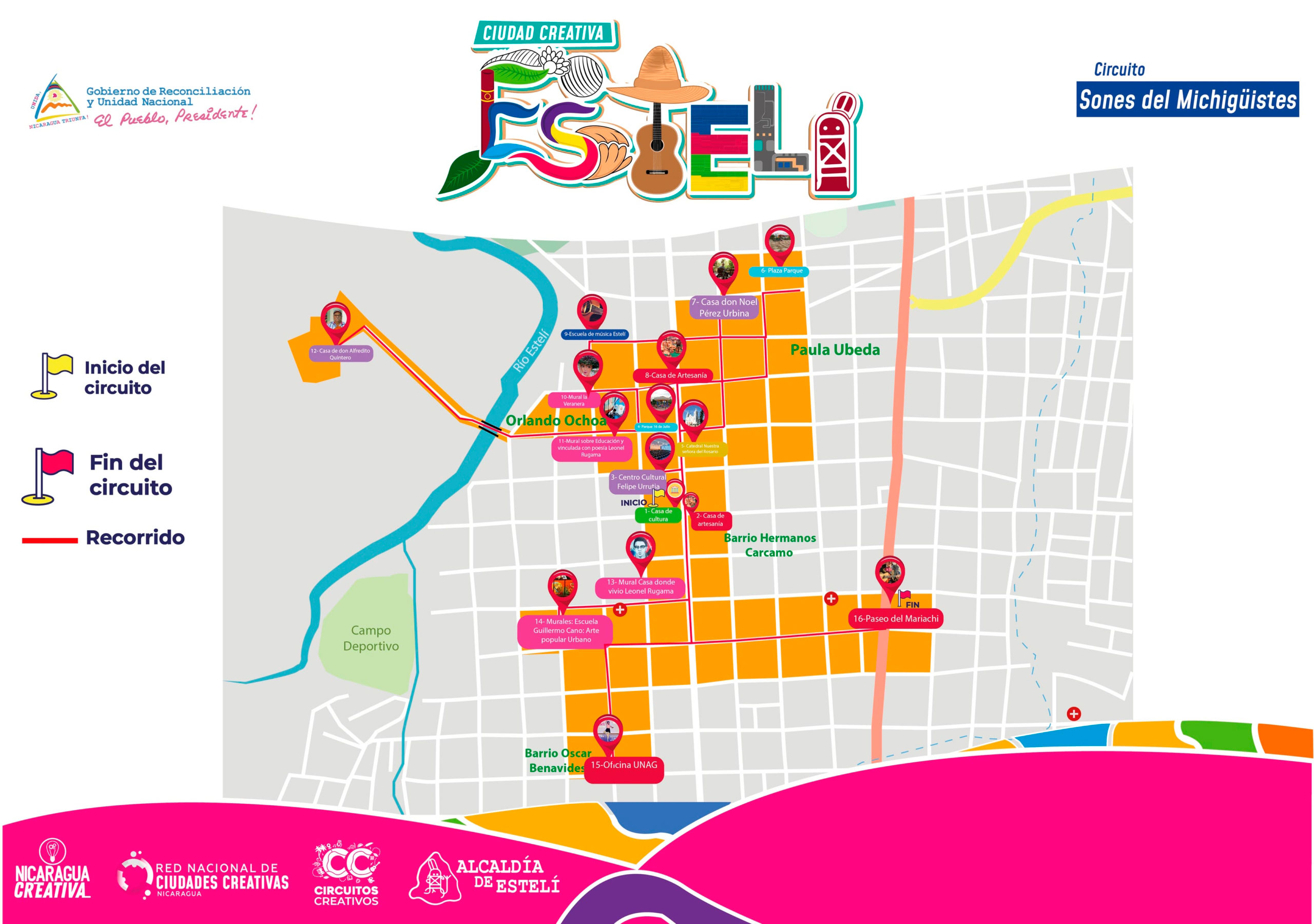
I only visited the city briefly, so the only thing I did was walk the streets looking for its many murals. You can find a map on this page.
That said, you could join a guided tour of one of the cigar factories, which many hostels offer for about 10$, or organize a trip to the Miraflor reserve; I don’t have precise information about it, but it seems you can get there on the bus that connects Estelí to Yali.
The nearby Somoto canyon, which I’ll talk about shortly, is often visited from Estelí on a tour (but it’s totally doable on your own too); if you’re not planning to continue your trip to Honduras, I recommend using Estelí as your base and visiting the canyon on a day trip without spending the night in Somoto.
Where to sleep in Estelí?
Luna international Hostel is a good hostel a stone’s throw from the center; the breakfast included in the price, served at the bar across the street, is great.
How to get to Estelí?
From Managua there are several daily connections, 2.5 hours on the express bus, 3.5 on the regular one. From León connections aren’t very frequent, so ask around at the terminal; at worst, take a bus to San Isidro, from where it’s easier to get to Estelí.

Somoto
Somoto is a quiet town in northern Nicaragua, near the border with Honduras, where tourism is still something really recent; the main attraction here is the nearby canyon.
Somoto canyon, up to 100 meters deep and in places only a couple of meters wide, was only “discovered” for tourism in 2006, and since then a real business has grown up around it.
How to visit Somoto canyon
Many people choose a tour and visit it on a day trip from Estelí; the cost ranges from 20 to 30$ depending on the length of the tour (tours start from different points along the river) and the company you choose; this is a company with lots of good reviews. You’re out all day and spend about 4-6 hours inside the canyon, walking, swimming, jumping off the walls (optional) or simply floating down the canyon with the current. It’s really fun and, in my opinion, a great way to spend the day. The tour normally includes transport, a guide and a life jacket, which is useful even for the most experienced swimmers, since in some stretches you can just let the current carry you. The guide also provides a waterproof bag for your valuables.
If you want a guide but still want to save something compared to the tour, I recommend getting to Somoto on your own: at the bus station there are often guides ready to offer their services. If that doesn’t happen, you’ll definitely find some at the canyon entrance; haggle over the price.
That said, you can still explore the canyon on your own, like many people do, as follows:
If you’re leaving from Estelí, take the 7:30 bus to Somoto (34C), from where there are frequent departures to El Espino (10C); if you’re already in Somoto, obviously you just need to take that bus.
Before reaching El Espino, get off at this spot and follow the trail to the river (the official canyon entrance, about 500 m before, isn’t the right one, because that’s where the circuit ends – it’s clear if you look at the map). Once you reach the river, just follow it to the canyon exit, then get back to the road and take the first bus back to Somoto; it’s all really simple and can easily be done on your own.
In some stretches you have to swim, so if you don’t have a waterproof bag, avoid bringing things that could get damaged; I recommend wearing closed shoes or sandals, not flip-flops. In September and October the canyon may be closed because of heavy rain.
There are boats covering the last stretch of the river before the exit, which cost a couple of dollars, but you can easily continue on foot/swimming. The fee you pay when you leave the canyon, before getting back to the road, is 2$.
If you’re coming on a day trip from Estelí, the last bus from Somoto should be around 17:00.

Somoto canyon.
Where to sleep in Somoto?
As I said, unless you’re heading to Honduras, I don’t think it’s worth sleeping in Somoto; visit the canyon on a day trip from Estelí instead. Anyway, there are a couple of places to stay in town and also around the canyon; I found a 5$ hostel in town, but honestly I think there are better ones.
How to get to Somoto?
There are direct buses from Managua, from the Mercado Mayoreo terminal (Google Maps), but they only run a couple of times a day, about 4$, 4 hours. If you’re out of luck, take a bus to Estelí, from where there are departures to Somoto about every hour.
Crossing the Nicaragua-Honduras border
From Somoto or Estelí, if you’re continuing your journey north, you have two options:
If you want to go straight to El Salvador, you have to cross the border at El Espino (frequent departures from Somoto), cross Honduras in a day and probably sleep in San Miguel in El Salvador, just past the border, before continuing your trip the next day. The itinerary is described in detail on this page.
If you’d rather visit Honduras, you have to cross the border at Las Manos. From Somoto or Estelí, take the bus to Ocotal, from where there are frequent departures to Las Manos (the border town). Cross the border on foot and take the bus to Paraiso, from where there are direct buses to Tegucigalpa. From there you can continue your trip to the ruins of Copan or to La Ceiba, where you take the ferry to the Bay Islands.
N.b. I took the first bus, at 3:45, from Somoto to Ocotal, and by 6:15 I’d already crossed the border, trying to get to La Ceiba in time to catch the afternoon ferry to Utila. Even though I was lucky with the various bus changes, I still arrived too late and spent the night in La Ceiba. Basically, with public transport it’s not possible to cover the Somoto/Estelí – Utila route in a single day.
Crossing the Nicaragua-Costa Rica border
Take a look at the article on Costa Rica, where it’s explained in detail.
Suggested travel itineraries in Nicaragua
Below are two itineraries, of 2 and 3 weeks; obviously take what follows as inspiration and adapt the itinerary to your interests/budget based on what you’ve read so far!
Two-week itinerary in Nicaragua
This itinerary doesn’t include the Corn Islands. If you want to include them in your two-week itinerary in Nicaragua, I suggest flying and obviously skipping one of the other destinations listed below. If you arrive at Managua airport during the day, I strongly recommend heading straight to Granada. From the airport, take a taxi to the UCA terminal, 100C, and then the microbus to Granada, 29C.

Granada (3 nights)
Day 1:
Arrival in Nicaragua. Transfer to Granada.
Day 2:
Explore the city; if you like, you could do the Isletas tour, and in the evening visit Masaya volcano.
Day 3:
A day at Laguna de Apoyo. If you like, you could spend the night here.
Ometepe (3 nights)
Day 4:
Transfer to Ometepe.
Day 5:
Explore the island by scooter, perhaps stopping at Ojo de Agua or San Ramon waterfall.
Day 6:
Concepcion volcano.
León (4 nights)
Day 7:
Transfer to León.
Day 8:
Cerro Negro and volcano boarding.
Day 9:
A relaxing day in León; don’t miss the cathedral.
Day 10:
Telica volcano.
Estelí (3 nights)
Day 11:
Transfer to Estelí.
Day 12:
Somoto canyon.
Day 13:
Visit the Miraflor reserve or join a cigar tour.
Day 14:
Return to Managua.
If you’re the kind of person who likes to party a bit or simply surf, consider skipping Estelí and going from Ometepe to San Juan del Sur.
Three-week itinerary in Nicaragua
With three weeks, I strongly recommend visiting the Corn Islands, even overland, but remember that the ferry only runs on Wednesdays, so plan your itinerary accordingly. For the rest, I recommend following the two-week itinerary I just described.

How to get around Nicaragua
Buses in Nicaragua
Buses and minibuses are by far the most common way to get around the country. Most of the buses are old yellow school buses, which travelers call “chicken buses.”
They can be really packed and your luggage might end up on the roof; it’s also fairly common for people to get on board to sell a bit of everything, especially food, but this too is an experience that’s part of the trip and of the local culture.
For long distances, if possible, it’s better to take the “express” buses, which only stop at set places and not wherever someone is waiting. Also, on this type of bus you get an assigned seat, so there’s no risk of having to stand.
Generally there’s only one terminal per city, which makes everything much simpler, except in Managua, where there are at least a couple, each serving a different area of the country. I strongly recommend using public transport and the so-called “chicken buses.” In general, it’s really easy and, above all, extremely cheap, but if for whatever reason you prefer tourist transport, keep in mind that there are numerous shuttles serving the main tourist destinations with a door-to-door service; they can be booked from any hostel/hotel and are much more expensive than public transport, but definitely faster and more practical.
On this site you’ll find public transport schedules and routes, a really useful resource: bookmark it!

Chicken bus!
Taxis in Nicaragua
Taxis are a common way to get around within cities but also to cover longer distances as they’re extremely cheap, especially when shared.
Beware of the many illegal cabs, especially in Managua: they may not be safe, especially for tourists. In any case, negotiate the fare before boarding to avoid unnecessary arguments.
Domestic flights in Nicaragua
La Costeña is the only airline offering flights within the country, although in my opinion the only destinations where it may make sense to fly are the Corn Islands or the Atlantic coast in general.
Hitchhiking in Nicaragua
Hitchhiking is really common, especially in rural areas and small towns, but avoid it in Managua.
Backpacking Nicaragua: costs
So, how much does a trip to Nicaragua cost? Managua isn’t exactly a cheap airport to fly into, but with a bit of luck you could find a round-trip flight for as little as 400-500€, though not in high season. Check out my guide on how to find cheap flights. Once you’re there, if you’re traveling on a budget, getting by on about 30€ a day is very doable. That said, you could also spend a lot more, especially if you like to party and take shuttles instead of public transport.
Cost of accommodation in Nicaragua
Hostels and accommodation in general are really cheap, with dorms normally costing 5-10$ (sometimes I even paid less), and they often include breakfast. “Hospedajes,” small family-run hotels, are another extremely cheap option, with private rooms that are often cheaper than a hostel bed.
Cost of food in Nicaragua
The food generally isn’t fantastic, but it’s undoubtedly cheap. A typical dish at a local comedor – which almost always consists of gallo pinto (rice and beans) plus a piece of meat (usually chicken) with a small side (often fried plantain) – costs on average between 60-90C.
Street food is even cheaper: quesillos, for example, a sort of flatbread filled with cheese and pickled vegetables, are an absolute must-try and cost even less than 15C depending on the place and size.

Gallo pinto, eggs and tortillas. Typical breakfast.
Cost of transport in Nicaragua
Public transport is extremely cheap, in my opinion the cheapest in all of Central America, with buses costing on average 1$ for every hour of travel. As for tourist shuttles, although they’re cheap by European standards, expect to pay up to 10 times more than for public transport.
To reduce exchange and withdrawal fees, see my guide to the best travel cards.
Backpacking Nicaragua: safety
Is Nicaragua safe? When I visited the country in July 2017, Nicaragua was undoubtedly a safe place where – with a minimum of common sense – you wouldn’t have had any kind of problem, except perhaps in the capital, Managua.
The country did, however, go through a deep political crisis in 2018, but the situation seems to have improved considerably (March 2019). Still, I’d suggest checking your own government’s official travel advice (for Italians, the Farnesina’s page) for up-to-date information.
Are you planning a trip to Nicaragua? Check out these posts:
Do you have any questions? Updated information? Feel free to leave a comment or message me on Instagram!
Since I no longer run ads, if you found this article helpful, please consider purchasing your travel insurance through one of the links on this site. Doing so supports my work at no additional cost to you. For EU and UK residents, I recommend True Traveller. For everyone else, I recommend HeyMondo, which offers a 5% discount. Thank you for your support!
For donations/pizzas and virtual beers 🙂
Did you like the post? Pin it!