Best Travel Cards for Backpackers in 2026
When you travel, especially for long periods, bank fees can quietly eat into your budget. A traditional card may charge €5 or more for an international ATM withdrawal, while foreign-currency payments can come with an exchange-rate markup of 2–3% or more.
The good news is that these costs are largely avoidable. Below I explain what to look for in a travel card, how to avoid the most common fees, and which accounts I currently consider the most useful for backpacking and long-term travel.
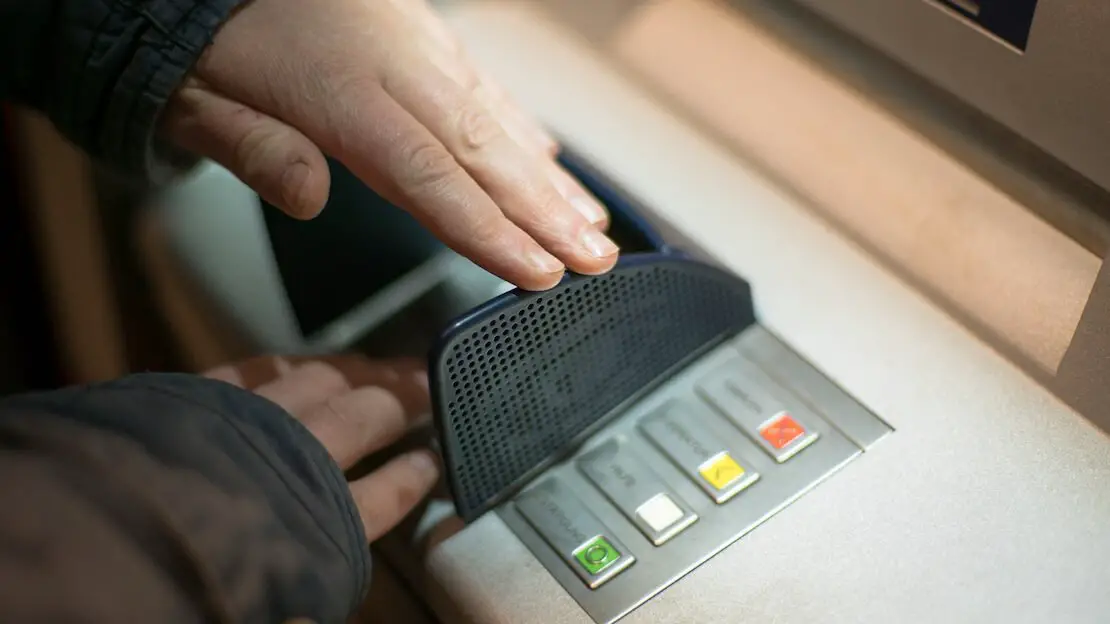
Remember to cover the keypad with your hand when withdrawing cash!
What to Look for in a Travel Card
As I see it, there are three main costs to pay attention to:
Fixed and account-management fees: monthly or annual fees, card issuance, transfers, top-ups and any other recurring costs.
ATM withdrawal fees: many traditional banks offer cheap or free withdrawals at home but become expensive abroad.
Foreign-exchange fees: these can be charged on both withdrawals and card payments in another currency. They are often less obvious than a fixed ATM fee because they may be hidden inside the exchange rate.
A few important tips
Your own bank is not the only one that can charge you. The local ATM operator may add its own fee, which your card provider cannot control. In countries where ATM fees are unavoidable, withdrawing a larger amount less frequently can reduce the impact.
It is also worth searching online before arriving in a country. Try something like “Thailand ATM no fee” or “Mexico ATM no fee”. Forums and travel blogs often have up-to-date information on which banks currently allow cheaper withdrawals with foreign cards.
Most importantly, if an ATM or card terminal offers to convert the transaction into euros or your home currency, decline the conversion and pay in the local currency. This is called Dynamic Currency Conversion and the exchange rate offered is usually much worse than the rate applied by a good travel card.
The same principle applies online: if a website gives you the choice between paying in the local currency or letting the website convert the price into euros, I normally choose the original currency and let my card provider handle the conversion.
Best Travel Cards for Backpackers in 2026
These are the accounts and cards I currently consider most interesting for travellers:
I am a bit of a savings freak and have spent far too much time reading fee schedules to figure out which accounts make the most sense for travelling. The goal is simple: keep fixed costs low, avoid exchange-rate markups and withdraw cash abroad without paying a fortune.
Important: availability and fees depend on your country of residence and can change over time. The figures below refer mainly to plans available to residents of Italy and the EEA. Always check the provider’s current conditions before opening an account.
And never travel with only one card. Even the best account is useless if the card gets stolen, blocked, damaged or swallowed by an ATM.
Quick Comparison
| Account | Monthly fee | ATM withdrawals | Foreign-currency spending | Best for | Link |
|---|---|---|---|---|---|
| Trade Republic | €0 | Free from €100; €1 below €100 | No additional Trade Republic FX fee | Simple, low-cost travel card | Open account |
| Revolut Standard | €0 | Up to €200/month and 5 withdrawals free; then 2% (minimum €1) | Fee-free weekday exchange up to €1,000/month; 1% above the limit and 1% weekend fee | All-round travel use | Open account |
| Wise | €0 | Up to €250/month free; 2.69% above the allowance | Mid-market rate plus a transparent conversion fee, from around 0.2% depending on currency | Multi-currency balances and transfers | Open account |
| N26 Standard / Go | €0 / €9.90 | Standard: 3 free eurozone withdrawals, 1.7% outside the eurozone. Go: free withdrawals abroad | No foreign-transaction fee on card payments | Travellers who want a traditional bank account; Go also includes travel benefits | Open account |
| Curve Pay | €0 | Free plan charges 2% or €2 per withdrawal, whichever is higher | Up to €250/month fee-free; then 2.99%. Weekend fee applies on the free plan | Combining several existing cards into one wallet | Get Curve |
Trade Republic Account Review

You can get €10 in shares after making two investments by entering the code: grj0l4ps
Trade Republic started as an investment broker but now also offers a current account and Visa debit card in several European countries, including Italy.
For travelling, the conditions are extremely straightforward: there is no monthly subscription fee, Trade Republic does not add a foreign-exchange fee to card payments, and ATM withdrawals of €100 or more are free. Withdrawals below €100 cost €1.
There is also a 1% Saveback feature on eligible card spending. The money is invested into a savings plan of your choice, with Saveback capped at €15 per month. To qualify, you need to invest at least €50 per month through savings plans.
For most travellers, this is one of the simplest options because you do not have to keep track of a small monthly ATM allowance. The main limitation is availability: Trade Republic is not offered everywhere.
Trade Republic at a glance:
- No monthly account fee.
- Visa debit card.
- No additional Trade Republic foreign-exchange fee on card payments.
- Free ATM withdrawals of €100 or more; €1 fee below €100.
- 1% Saveback on eligible spending, subject to the savings-plan requirement and monthly cap.
- Best suited to travellers who want a simple card with very few fees to think about.
Revolut Account Review
Revolut offers five personal plans in Italy: Standard, Plus, Premium, Metal and Ultra.
Revolut Standard has no monthly fee. You can exchange up to €1,000 per month on weekdays without an additional fair-usage fee. Above that limit, Revolut charges 1%. Standard users also pay a 1% fee on currency exchanges made during the weekend.
ATM withdrawals are free up to €200 per rolling month and a maximum of five withdrawals. Once either limit is exceeded, the fee is 2% of the amount withdrawn, with a minimum charge of €1. Keep in mind that the ATM operator may still charge its own fee.
Revolut Plus costs €3.99 per month. The main travel-related improvement is a higher €3,000 monthly exchange allowance and a lower 0.5% weekend exchange fee. The ATM allowance remains €200 per month, so for me this is still the least interesting plan for travellers.
Revolut Premium costs €9.99 per month. Currency exchange has no monthly fair-usage limit or weekend surcharge, while free ATM withdrawals increase to €400 per month.
Premium also includes travel insurance for eligible trips. However, the current policy has conditions and exclusions, and Premium and Metal generally cover trips of up to 30 days. For long-term backpacking, I would still prefer separate travel insurance designed for longer trips.
Revolut Metal costs €15.99 per month and raises the fee-free ATM allowance to €800 per month. It also includes additional travel and subscription benefits. Whether those extras justify the fee depends entirely on how much you use them.
Revolut Ultra costs €55 per month and raises the ATM allowance to €2,000 per month. It comes with many additional benefits, but for the average backpacker the monthly cost is difficult to justify.
One useful thing to understand: when Revolut says that a currency is not supported as an account balance, it does not necessarily mean you cannot use the card in that currency. In many cases you can still pay or withdraw and Revolut will convert the transaction automatically.
Revolut at a glance:
- Standard: €0/month; Plus: €3.99; Premium: €9.99; Metal: €15.99; Ultra: €55.
- Standard exchange allowance: €1,000/month on weekdays; Plus: €3,000; Premium, Metal and Ultra: no fair-usage limit.
- Weekend exchange fee: 1% on Standard, 0.5% on Plus, none on Premium, Metal and Ultra.
- Fee-free ATM allowance: €200 Standard/Plus, €400 Premium, €800 Metal, €2,000 Ultra.
- Premium, Metal and Ultra include travel insurance, but conditions and maximum trip lengths apply.
- Best suited to travellers who want a flexible app, multiple currencies and a strong free plan.
Wise Account Review
Wise, formerly TransferWise, is especially useful if you regularly hold, receive or transfer money in different currencies.
There is no monthly account fee, and you can hold and manage more than 40 currencies. Currency conversion uses the mid-market rate plus a transparent fee that varies depending on the currencies involved. Wise currently advertises conversion fees starting from around 0.2%.
The physical debit card costs €7 for residents of Italy, while the digital card is free. If you pay in a currency you already hold in your Wise account, there is no conversion fee. If you do not hold that currency, Wise automatically converts from one of your available balances and applies the relevant conversion fee.
For ATM withdrawals, residents of Italy currently get up to €250 per month without a Wise withdrawal fee. Above that allowance, Wise charges 2.69% on the amount exceeding the limit. As always, the ATM itself may add a separate fee.
Wise is particularly useful for people who move money between countries or get paid in different currencies. For pure travel spending, Revolut, N26 or Trade Republic may be simpler depending on your needs, but Wise remains one of the most transparent options.
You can use Wise’s cost calculator to see the exact fee before making a transfer or conversion. For large international transfers, Atlantic Money can also be worth comparing.
Wise at a glance:
- No monthly account fee.
- €7 one-time cost for the physical card in Italy; digital card is free.
- Hold and manage more than 40 currencies.
- Currency conversion at the mid-market rate plus a transparent fee, starting from around 0.2% depending on currency.
- Up to €250/month in ATM withdrawals without a Wise withdrawal fee; 2.69% above the allowance.
- Best suited to travellers who frequently hold, receive or transfer multiple currencies.
N26 Account Review
N26 is another fully online bank. In Italy, the main personal plans are Standard, Smart, Go and Metal.
N26 Standard has no monthly fee and includes a free virtual Mastercard. A physical card can be ordered for a one-time fee. The account includes three free ATM withdrawals per month in the eurozone.
The strongest feature for travellers is that N26 does not add a foreign-transaction fee to card payments in another currency. However, Standard and Smart charge 1.7% on ATM withdrawals outside the eurozone.
N26 Smart costs €4.90 per month and mainly adds budgeting and account-management features. From a travel perspective, I do not think the extra cost is particularly compelling.
N26 Go, previously known as N26 You, costs €9.90 per month. This is the plan that becomes genuinely interesting for travellers: ATM withdrawals outside the eurozone are free, card payments have no foreign-transaction fee, and travel insurance from Allianz Assistance is included. N26 also currently offers 1% cashback on eligible card payments made outside the EEA, UK and Switzerland.
N26 Metal costs €16.90 per month and includes the same core travel advantages as Go, plus additional insurance and premium benefits.
If you travel several times per year and would otherwise buy separate travel insurance, N26 Go can make sense. For long-term trips, however, I would still check the insurance conditions carefully rather than assuming the included policy is suitable for every itinerary.
N26 at a glance:
- Standard: €0/month; Smart: €4.90; Go: €9.90; Metal: €16.90.
- No foreign-transaction fee on card payments, regardless of plan.
- Standard includes three free monthly ATM withdrawals in the eurozone.
- Standard and Smart charge 1.7% for ATM withdrawals outside the eurozone.
- Go and Metal include free ATM withdrawals outside the eurozone and travel insurance.
- Best suited to travellers who want a proper bank account and, with Go, an all-in-one paid travel package.
Curve Review

Curve is different from the other products in this article. It is essentially a wallet that lets you link several existing Visa or Mastercard cards and use them through a single Curve card.
You choose which underlying card you want to charge in the app, and Curve processes the payment through that card. This can be convenient if you have several accounts and do not want to carry all of your cards with you.
Curve can also handle the currency conversion before charging the underlying card, which may help if that card normally applies an expensive foreign-exchange markup.
The current plans are Curve Pay, Curve Pay X, Curve Pay Pro and Curve Pay Pro+.
Curve Pay is free. It includes up to €250 per month of fee-free foreign-currency spending. Above that, Curve charges 2.99%. ATM withdrawals on the free plan cost 2% or €2, whichever is higher, and an additional weekend foreign-exchange fee applies.
Curve Pay X costs €5.99 per month and substantially increases the fee-free foreign-spending allowance while including up to €300 per month of fee-free foreign ATM withdrawals.
Curve Pay Pro costs €9.99 per month and raises the foreign ATM allowance to €500, while Curve Pay Pro+ costs €17.99 per month and raises it to €1,000. The paid plans also add features such as longer Go Back in Time windows and, on the higher tiers, cashback benefits.
Curve used to be one of my favourite travel recommendations, but the free plan is much less attractive today. I now see it primarily as a useful wallet for combining cards rather than as the best standalone travel solution.
Curve at a glance:
- Curve Pay: free; Pay X: €5.99/month; Pay Pro: €9.99/month; Pay Pro+: €17.99/month.
- Free plan includes up to €250/month of fee-free foreign-currency spending.
- Free-plan ATM withdrawals cost 2% or €2, whichever is higher.
- Paid plans increase the foreign-spending and ATM allowances.
- Lets you combine multiple existing cards into one wallet.
- Best suited to travellers who want to manage several cards through a single app rather than replace their main bank account.
Which Travel Card Should You Choose?
There is no single perfect travel card. It depends on how often you withdraw cash, how much you spend in foreign currencies, whether you want to pay a monthly fee and which accounts are available in your country.
Personally, I would focus on the following:
- If you want to keep fixed costs at zero: Trade Republic is extremely simple for travellers, while Revolut and Wise make excellent backup cards. Using two different accounts gives you much more flexibility than relying on one card.
- If you travel frequently and do not mind a monthly fee: N26 Go is interesting because it combines free foreign ATM withdrawals with travel insurance and other travel benefits. Revolut Premium or Metal can also make sense if you use their additional features.
- If you regularly deal with several currencies or international transfers: Wise remains one of the most useful accounts to have.
- If you already have several cards and want to combine them: Curve can still be useful, although I would not choose the free plan primarily for ATM withdrawals.
Whatever you choose, I strongly recommend travelling with at least two cards, ideally from different networks or issuers, and keeping them in separate places. Cards can be stolen, blocked, demagnetized or swallowed by an ATM at the worst possible moment.
I also always carry some emergency cash. Euros are easy to exchange in many countries, while U.S. dollars are often even more widely accepted by exchange offices.
If you have questions or know of another travel account worth adding to the list, feel free to leave a comment.
P.S. If you found this article useful, consider opening an account through one of the affiliate links on this page. It supports the site at no additional cost to you. Thank you!
For donations, pizzas and virtual beers 🙂
Did you like the post? Pin it!